In existence Flammable and explosive gas or dust environments In industrial settings such as petrochemical plants, coal mines, pharmaceutical factories, and grain silos, it is essential to ensure the safety of every sensing component.Explosion-proof encoderIt is the crucial core test and control component in this scenario.
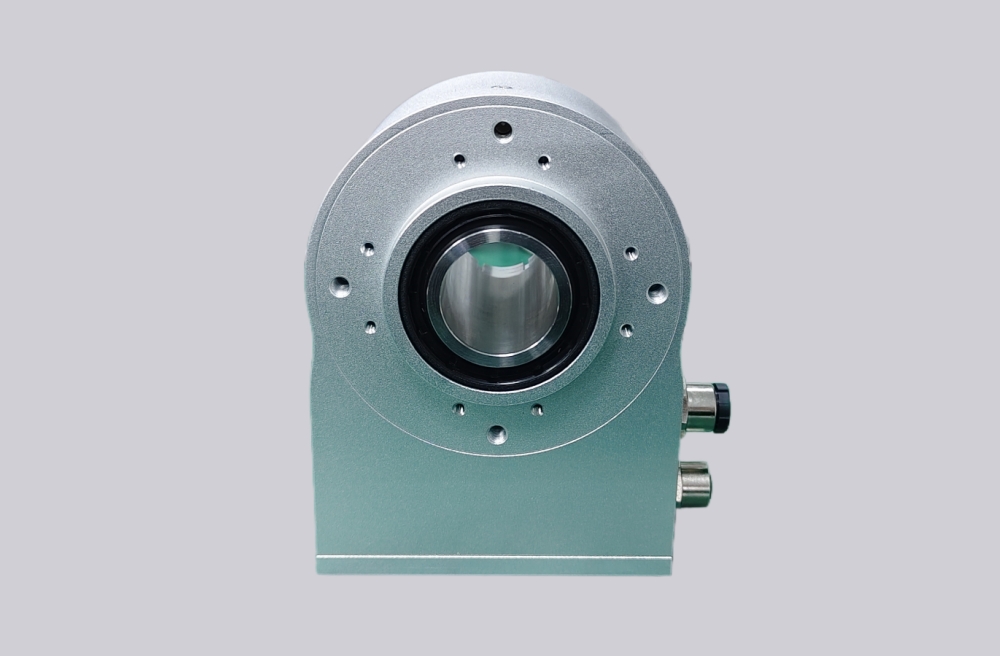
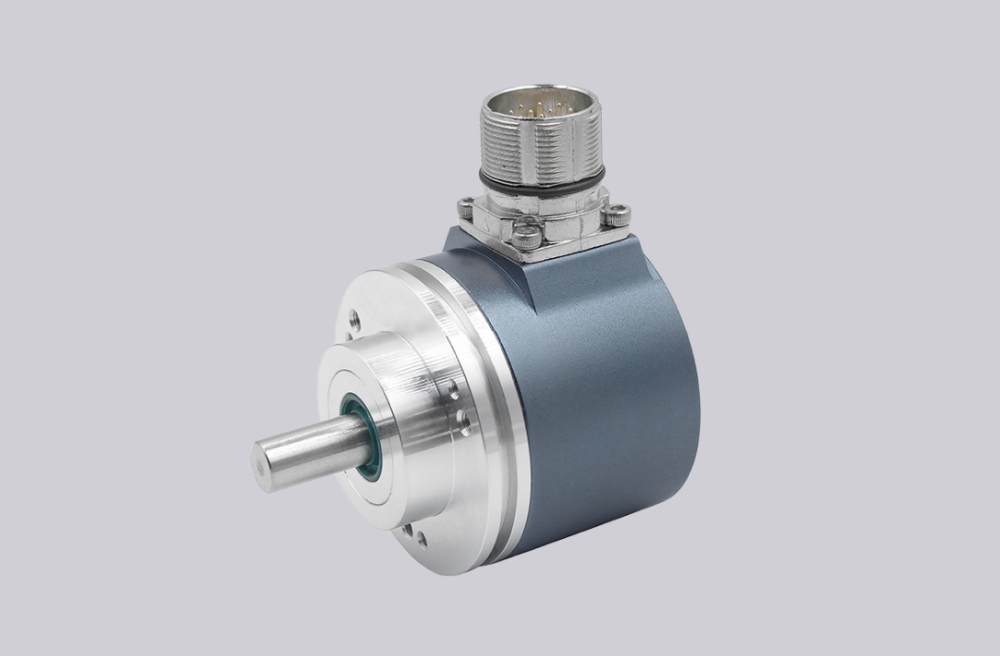
Domestic Explosion-Proof EncoderDeveloped and manufactured by domestic manufacturers, and certified throughCompliant with explosion-proof standards and engineering application practicesencoder products. They not only provide position/angle/displacement feedback functions inherent to encoders but also feature structures and performance that meet on-site explosion-proof safety requirements.
I. What is an explosion-proof encoder?
Explosion-proof encoders belong to the category of special-purpose encoders and must meet two sets of requirements:
- Measurement and control functions comply with industrial standards.
- Accurate angle/position/displacement output
- Supports protocols such as SSI, RS485, and CANopen
- The safety structure complies with explosion-proof standards.
- Structural design prevents explosion propagation
- High protection rating and excellent sealing performance
- Safe for long-term use in hazardous areas
Common explosion-proof types include:
- Explosion-proof type (Ex d): Explosions are isolated by a thick outer shell.
- Intrinsically safe (Ex i)Limit electrical energy to prevent ignition
- Composite Explosion-Proof Structure:Suitable for complex environments
Domestic Explosion-Proof EncoderThis refers to equipment designed and manufactured locally that incorporates these explosion-proof structural requirements.
II. Why Are Domestic Explosion-Proof Encoders Needed?
In many past industrial projects, particularly those requiring safety certification (such as petrochemical, coal mining, and chemical plants), explosion-proof encoders were often supplied by foreign brands.
However, with the development of domestic automation control systems, field engineering integration, and the trend toward domestic substitution, an increasing number of projects require:
- Domestic solutions compatible with domestic control systems
- Local supply chains enhance supply reliability
- Localization Engineering Response and Technical Support
- The localization project complies with national industrial policies.
Therefore, “domestic explosion-proof encoders” have transitioned from “limited trials” to gradually entering the actual supply chain for engineering projects.
III. Core Features of Domestic Explosion-Proof Encoders
1. Safety Design
Explosion-proof structures must be rigorously designed and comply with local explosion-proof certification standards.
- High-strength housing
- Structural integrity is intact
- Electrical isolation design is well-considered.
These are the fundamentals for meeting the requirements of hazardous areas on site.
2. Industrial Protocols and Compatibility
Domestic explosion-proof encoders typically support multiple industrial communication protocols:
- SSI (Synchronous Serial Interface)
- RS485
- CANopen
- Profibus
- Profinet
- 4–20mA / Parallel IO
Extensive protocol support facilitates seamless integration with PLCs, DCS systems, motion controllers, and other systems.
3. Highly adaptable to the environment
Given the on-site conditions, the following must be provided:
- Vibration-resistant
- Dustproof and waterproof (high IP rating)
- Corrosion-resistant
- Wide temperature operating range
This adaptability is often the key to differentiated competition between imported and domestic products.
IV. Typical Application Scenarios
Domestic explosion-proof encoders are primarily used in the following hazardous environments:
Petrochemical
For angle feedback in fractionation columns, valve positioning, and angle monitoring of conveying equipment.
Coal Mines and Mining Operations
For belt conveyor drum position feedback, hoist angle control, etc.
Chemical processing equipment
For position control and monitoring of reactors and agitators, as well as hazardous material transfer equipment.
Dust Explosion-Proof Environment
Location feedback for areas such as grain silos, woodworking shops, and powder processing workshops.
V. How to Select Domestic Explosion-Proof Encoders?
When selecting models in practice, the following core factors should be considered:
1. Does the explosion-proof rating meet the on-site requirements?
Based on the hazardous area classification, verify whether the encoder's explosion-proof rating is compatible (Ex d / Ex i / intrinsically safe, etc.).
2. Protocol Compatibility and System Integration Capability
Whether it meets system communication requirements, such as compatibility with PLC/DCS/fieldbus systems.
3. Mechanical adaptability
Whether the encoder shaft diameter, flange dimensions, and mounting method are compatible with the on-site equipment.
4. Environmental Adaptability
Whether it meets the complex requirements of on-site temperature, humidity, vibration, dust, and other conditions.
5. Long-term supply and localized support capabilities
Domestic projects often require long-term supply and rapid on-site technical support, which are also key criteria for evaluating domestic solutions.
VI. Domestic Production Trends for Explosion-Proof Encoders
With the increasing adoption of domestically produced control systems, PLCs, and motion controllers, coupled with national policy support for the localization of critical components, several distinct trends have emerged in the domestic explosion-proof encoder market:
1. The protocol support system is well-established.
More industrial protocols such as Profinet, Profibus, Ethernet, CANopen, and RS485 are supported by domestic products.
2. Accumulation of Engineering Validation Cases
Through long-term operational verification in actual engineering projects, the reliability of domestically produced explosion-proof encoders has steadily improved.
3. Local technical support responds quickly
On-site support, custom development, and local installation and debugging ensure faster local response times.
4. Domestic products replacing imports is becoming a trend.
Gradually penetrating from non-critical scenarios to mid-to-high-end applications.
VII. Conclusion
Domestic Explosion-Proof EncoderAs a key component for position feedback and safety monitoring in hazardous working conditions, it has evolved from an “optional solution” to a viable alternative for numerous engineering projects.
When selecting models, comprehensive evaluation based on multiple dimensions—including explosion-proof rating, protocol compatibility, and field adaptability—serves as the core criterion for determining project implementation.

Sividi Encoder
TEL: +86 15050450799 (WeChat same number)


© Kunshan Sividi Co. Site Map Su ICP No. 14036688  Su Gong Network Security No. 32058302003763