In modern industrial automation systems, with the growing demand for smart manufacturing, industrial Ethernet, and real-time control,Ethernet EncoderEthernet encoders have become a common feedback device in high-performance data exchange scenarios. While traditional encoders utilize serial protocols such as SSI/RS485, Ethernet encoders enable high-speed, real-time transmission of position and status data via industrial Ethernet. This makes them suitable for control systems demanding higher speed, bandwidth, and networking capabilities.
When people mention Domestic Ethernet Encoder Encoders typically refer to products developed and manufactured by local Chinese manufacturers that can seamlessly communicate with control systems via industrial Ethernet protocols.
1. What is an Ethernet encoder?
Ethernet Encoder An encoder that employs industrial Ethernet communication protocols to directly output measurement data such as position, velocity, and angle via Ethernet.
Compared to traditional serial interface encoders, it offers the following advantages:
- High-speed data transmission
- Multi-node Networked Management
- Real-time performance and bandwidth advantages are significant.
- Direct communication with PLCs/industrial switches/real-time controllers
- Supports network topologies (linear, star, ring, etc.)
Common industrial Ethernet protocols include EtherCAT, EtherNet/IP, and Profinet.
Domestic Ethernet encoders are products designed by Chinese encoder suppliers based on this foundation, capable of adapting to domestic automation control systems and fieldbus environments.
II. Technical Characteristics of Domestic Ethernet Encoders
1. Networked communication capabilities
Supports Industrial Ethernet protocols, enabling multiple encoder nodes to operate synchronously within a single network environment.
2. High Bandwidth and Real-Time Capability
Compared to serial protocols, Ethernet offers higher bandwidth and faster data refresh rates, making it suitable for high-speed, high-precision systems.
3. Multi-protocol support
Some domestic Ethernet encoders support multiple protocol versions, including but not limited to:
- EtherCAT
- Profinet
- EtherNet/IP
- Modbus TCP
This makes it more flexible for integration into different control systems.
4. Scalability and Diagnostic Capabilities
Ethernet encoders often feature enhanced network diagnostics capabilities, facilitating remote debugging and maintenance in industrial environments.
III. Typical Application Scenarios for Domestic Ethernet Encoders
Domestic Ethernet encoders are primarily used in applications requiringHigh bandwidth, high real-time performance, and networked control requirementsIndustrial scenarios, such as:
- Smart Manufacturing Automated Production Line
- High-Frequency Feedback in Robot Systems
- Motion Control System
- CNC Numerical Control System Network Integration
- Complex Multi-Axis Interlinked System
In these scenarios, the Ethernet protocol provides an efficient and stable data exchange mechanism for motion control systems.
IV. How to Select Domestic Ethernet Encoders
When selecting domestic Ethernet encoders, it is recommended to focus on the following key technical factors:
1. Protocol Compatibility
Verify whether the selected Ethernet encoder supports the network protocol of the corresponding control system, such as Profinet, EtherCAT, or EtherNet/IP.
2. Data Update Rate and Real-Time Capability
Verifying whether the encoder can meet the system's requirements for data update frequency is particularly critical in high-speed motion control systems.
3. Network Topology and Node Support Capability
For large-scale networked control systems, the encoder's support for the number of nodes and topology structure should be confirmed.
4. Engineering Debugging and Diagnostic Capabilities
Ethernet encoders should possess basic network diagnostics and node status feedback capabilities to facilitate maintenance and fault localization.
V. Engineering Practice Examples of Domestic Ethernet Encoders
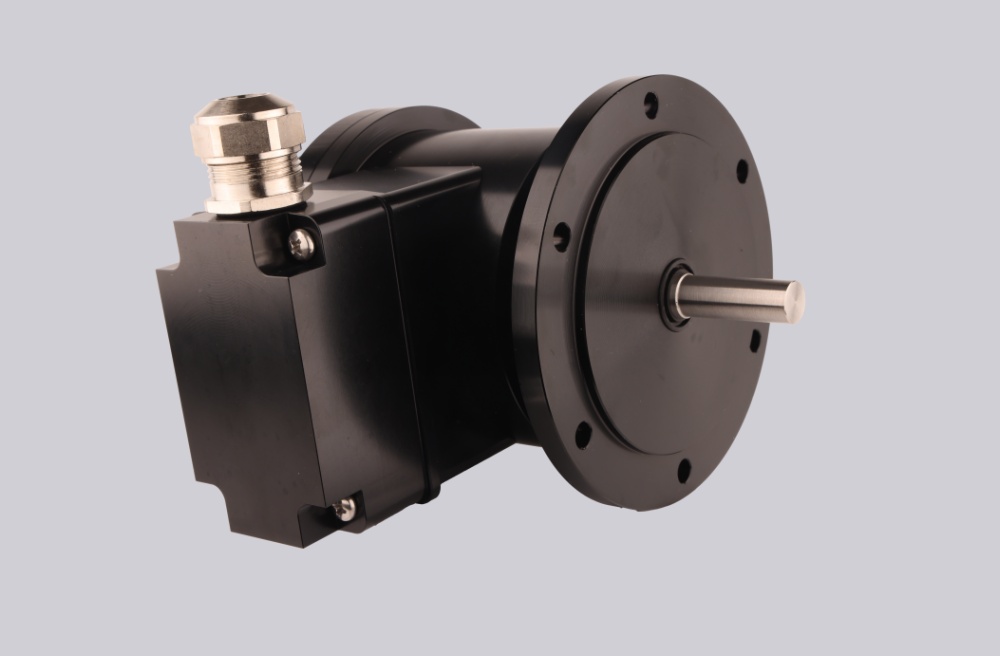
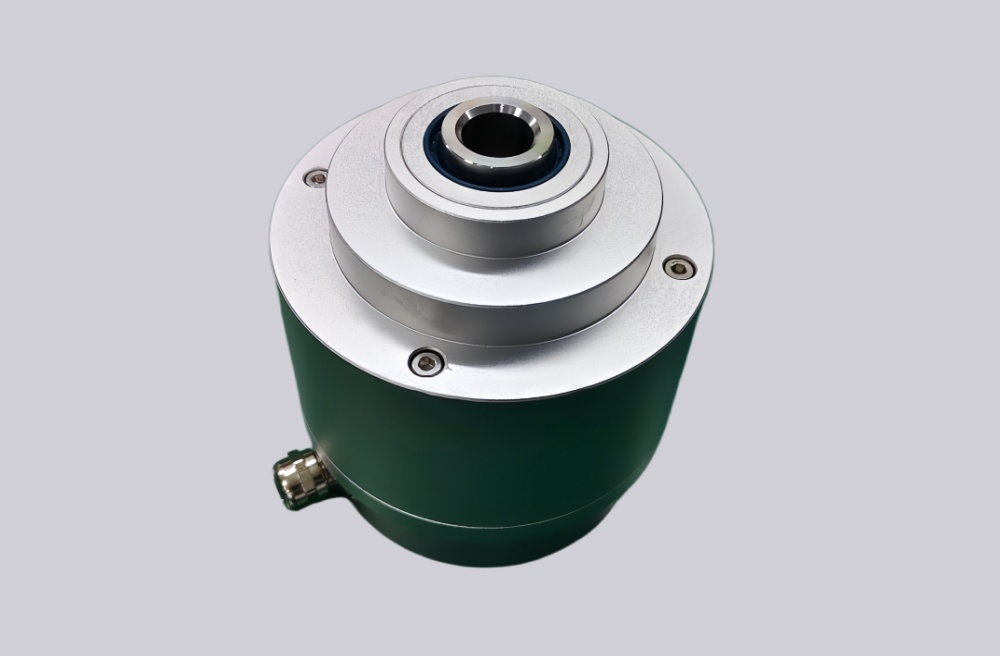
From an engineering application perspective, some domestic encoder suppliers have begun introducing encoder products supporting industrial Ethernet protocols, gradually establishing an application foundation within smart manufacturing systems. For instance, Ethernet encoders from certain domestic suppliers now support real-time control protocols, enabling direct integration with domestic PLCs and industrial switches to achieve real-time motion control and network-level data feedback.
This type of product inRobotic systems, large-scale production lines, and multi-node coordinated control systemsPossesses practical implementation potential and can meet higher-level industrial control requirements.
VI. Comparison Between Domestic Ethernet Encoders and Traditional Interfaces
| Characteristics | Traditional serial interface encoders (such as SSI/RS485) | Ethernet Encoder |
|---|---|---|
| Communication speed | Moderate | High-speed |
| Network Topology | peer-to-peer | Multi-node network |
| Real-time capability | Generally | 强 |
| bandwidth | 低 | 高 |
| diagnostic capability | Restrictions | stronger |
| Agreement Type | Serial | Industrial Ethernet |
In large-scale, high-real-time control systems, Ethernet encoders typically offer greater advantages, while traditional encoders remain effective in simple feedback scenarios.
VII. Conclusion
Domestic Ethernet Encoder This is a high-performance encoder product designed for future industrial communication networks, enabling high-speed data exchange and system network integration through industrial Ethernet protocols. During the actual selection process, key considerations should include:
- Compatibility with control system protocols
- Real-time Capabilities and Network Topology Support
- Engineering Debugging and Diagnostic Capabilities
With the maturation of the domestic industrial protocol ecosystem, domestically produced Ethernet encoders demonstrate strong growth potential in smart manufacturing and high-end motion control systems.

Sividi Encoder
TEL: +86 15050450799 (WeChat same number)


© Kunshan Sividi Co. Site Map Su ICP No. 14036688  Su Gong Network Security No. 32058302003763


