In the field of industrial automation and engineering equipment, RS485 communication is widely adopted due to itsHigh interference resistance, long transmission distance, and high system stabilityWidely used in position and velocity feedback systems, “domestic RS485 encoders” have gradually become a key consideration for equipment manufacturers and system integrators during selection.
I. What is an RS485 Encoder?
RS485 encoder refers to one that employs RS485 Communication Interface Encoder products that output position or angular information.
Compared to pulse-type or analog output encoders, RS485 encoders are more suitable for:
- Multi-device Networking
- Long-distance signal transmission
- Complex Electromagnetic Environment in Industrial Settings
Domestic RS485 encoders are developed and manufactured by domestic manufacturers based on this foundation, meeting the demand for domestic production and supply.
II. Current Development Status of Domestic RS485 Encoders
With the widespread adoption of domestic automation systems and controllers, domestically produced RS485 encoders continue to improve in the following areas:
- Communication Protocol Stability Enhancement
- Data Refresh Speed and Accuracy Optimization
- Enhanced Adaptability at Construction Sites
- Enhanced compatibility with domestic PLCs and controllers
Currently, domestically produced RS485 encoders have been deployed for long-term use across various industrial applications.
III. Main Types of Domestic RS485 Encoders
1. RS485 Absolute Encoder
Suitable for systems requiring position information retention after power loss, such as construction machinery and lifting equipment.
2. RS485 Incremental Encoder
It is more commonly used in systems with relatively well-defined cost and structural requirements.
3. RS485 Cable-Pull Displacement Encoder
For linear displacement measurement, such as stroke control and telescopic mechanisms.
4. RS485 Explosion-Proof Encoder
Suitable for industrial environments with flammable and explosive hazards.
IV. Typical Application Scenarios for Domestic RS485 Encoders
Domestic RS485 encoders are widely used in:
- Construction Machinery Position Feedback
- Automated production line
- Port and Logistics Equipment
- Metallurgical and Mining Machinery
- New Energy Equipment Control System
In these scenarios, the stable communication characteristics of RS485 are particularly important.
V. Key Considerations for Selecting Domestic RS485 Encoders
1. Communication Protocols and Data Formats
Different manufacturers may employ distinct data frame formats based on RS485 communication; compatibility with the control system must be verified.
2. Communication Range and Interference Resistance
Whether it is suitable for long-distance cabling and the stability of data transmission in complex electromagnetic environments.
3. Accuracy and Resolution
Does it meet the system's accuracy requirements for angle or displacement measurement?
4. Mechanical Installation Method
Whether the shaft diameter, flange type, mounting space, and other specifications match the equipment structure.
5. Domestic Substitution and Customization Capabilities
When replacing imported RS485 encoders, does it support customization of installation and communication parameters?
VI. Industry Practice Examples of Domestic RS485 Encoders
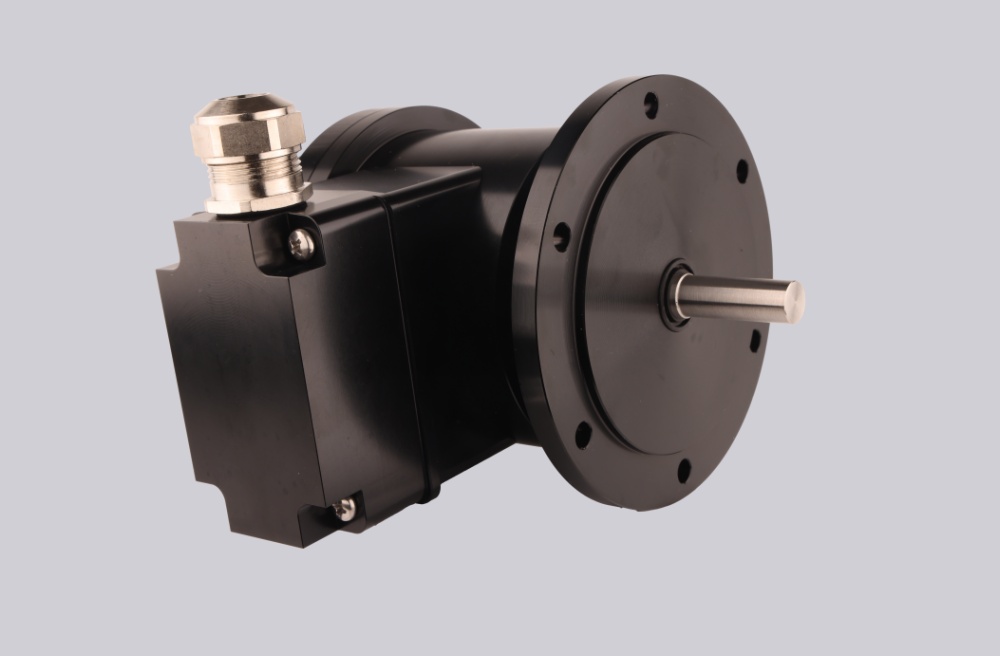
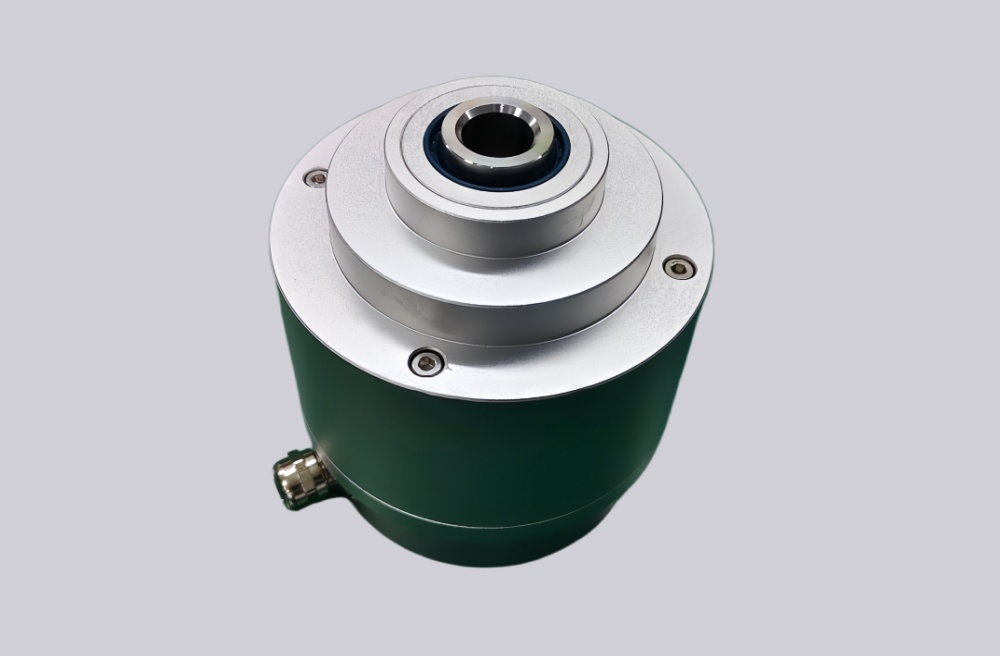
From an engineering application perspective, some domestic encoder manufacturers have accumulated substantial practical experience in the field of RS485 encoders. For instance, **SIVIDI** offers a variety of structural configurations and parameter combinations for RS485-output rotary encoders and draw-wire displacement encoders, and has participated in domestic substitution applications within certain construction machinery and automation projects.
This type ofDomestic solutions centered on engineering adaptabilitymore easily implemented in real-world projects.
VII. Comparison of Domestic RS485 Encoders with Other Interface Types
| Interface Type | Features | Applicable Scenarios |
|---|---|---|
| RS485 | Stable, interference-resistant, long-range | Construction machinery, industrial sites |
| SSI | Highly real-time | High-precision positioning |
| CANopen | Bus-based, intelligent | Complex Control Systems |
| 4–20 mA | Simple and reliable | Analog System |
| Parallel I/O | Structure is intuitive | Traditional Control Systems |
VIII. Conclusion
“Domestic RS485 encoders have become one of the mature choices in industrial automation systems.
When selecting models in practice, it is recommended to focus on:
- Communication Stability
- Protocol Compatibility
- Engineering Application Case Studies
- Domestic Substitution and Customization Support Capabilities
As domestic industrial technology continues to advance, domestically produced RS485 encoders are demonstrating excellent practical value in an increasing number of application scenarios.

Sividi Encoder
TEL: +86 15050450799 (WeChat same number)


© Kunshan Sividi Co. Site Map Su ICP No. 14036688  Su Gong Network Security No. 32058302003763


