I. What is a Mechanical Encoder Company?
A mechanical encoder company refers to a manufacturer or supplier specializing in providing angle, position, or displacement measurement components for mechanical equipment. In industrial automation, construction machinery, and heavy-duty equipment, encoders serve as feedback sensor modules, constituting a vital component for precise control and safe operation of the equipment.
“Mechanical Encoder Companies” refers not only to manufacturers capable of producing standard products, but also to enterprises with capabilities in solution customization, protocol adaptation, and engineering services.
II.Domestic Mechanical EncoderThe company's development background
As China's manufacturing sector advances toward intelligent upgrades and the localization of key components, an increasing number of domestic enterprises are entering the mechanical encoder field.Domestic Mechanical EncoderThe company has gradually evolved along a path from low-end substitution → comprehensive catch-up → industry application and practical validation.
This trend is driven by the following factors:
Growing Demand for Automation
Domestic production share of control systems increases
Increased Demand for Supply Chain Security and Cost Control
Enhanced local engineering support capabilities
III. Core Product Types of Domestic Mechanical Encoder Companies
A mature mechanical encoder company typically offers the following products:
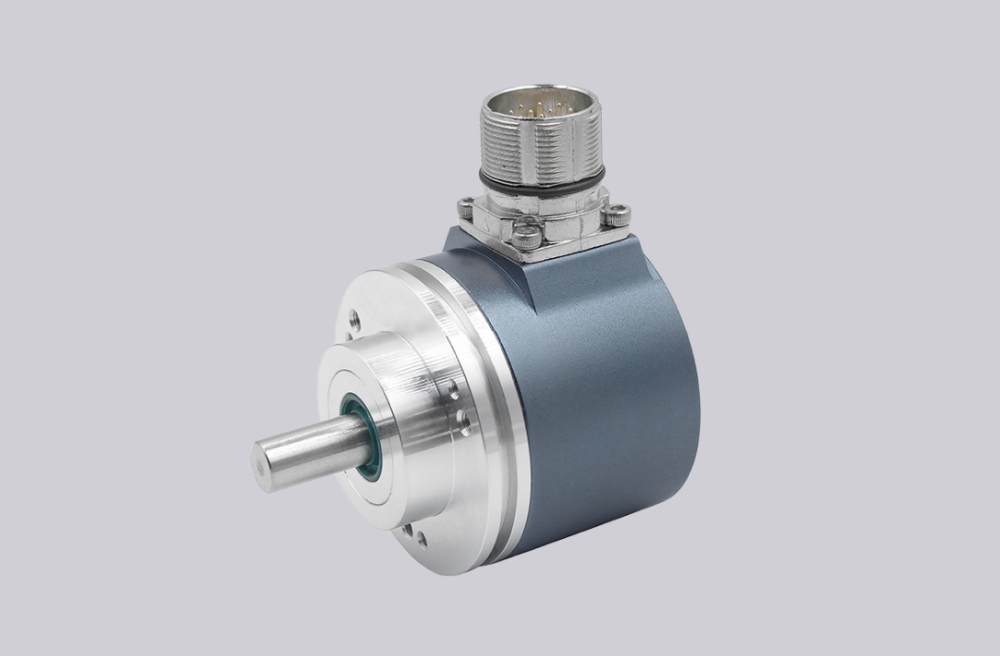
- rotary encoder
For angular positioning and velocity feedback in mechanical systems, including:
Incremental Rotary Encoder
Absolute Rotary Encoder
- Draw-Wire Displacement Encoder
Suitable for travel measurement applications, such as travel feedback for construction machinery arms and lifting platforms.
- Explosion-proof/Heavy-duty Encoder
For use in high-risk environments or heavy-duty applications such as oil and gas, chemical processing, and port machinery.
- Mechanical Interface Encoder
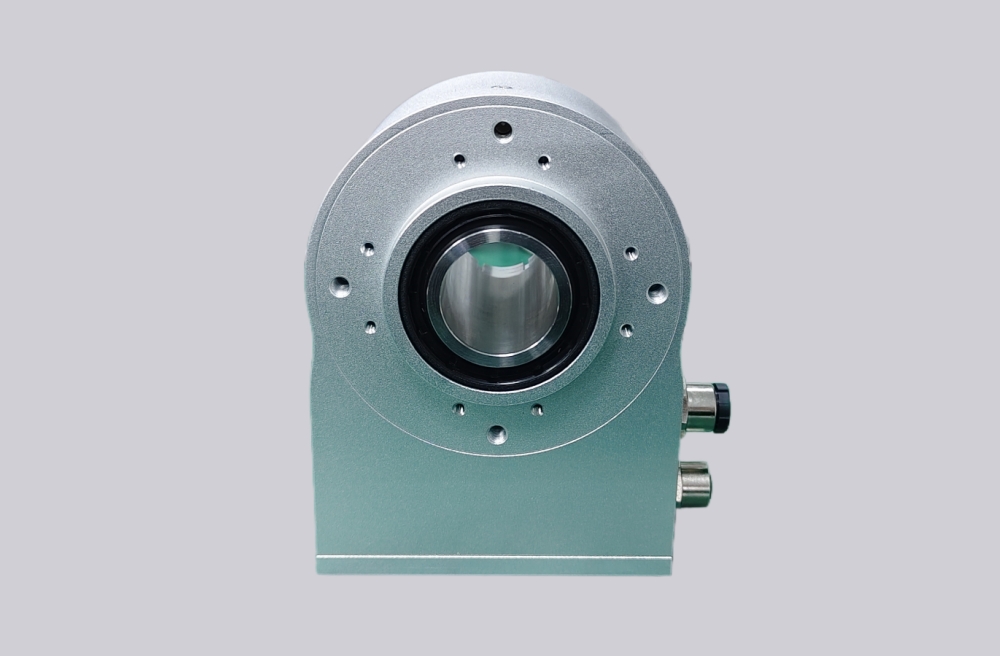
Encoder assemblies featuring multiple mechanical mounting configurations (such as flange-mounted, hollow shaft, solid shaft, etc.).
IV. Key Evaluation Metrics for Domestic Mechanical Encoder Companies
When selecting and evaluating domestic mechanical encoder manufacturers, it is recommended to consider the following dimensions:
1. Technical Capabilities and Product Coverage
Does it offer a comprehensive product line, including incremental, absolute, and application-specific encoders?
2. Protocol and Interface Support
Does it support mainstream industrial protocols, such as:
Profinet, Profibus, CANopen, SSI, RS485, Parallel IO, 4–20mA
Multi-protocol support means the product integrates more easily with different control systems.
3. Field Application Cases
Does it have proven engineering project cases, such as construction machinery, automated production lines, port equipment, etc.?
4. Customization and Technical Service Capabilities
Does the company possess engineering capabilities in areas such as non-standard requirements, mechanical installation, and communication protocol matching?
5. Quality and Reliability
Stability performance under complex operating conditions such as vibration, shock, high temperatures, and low temperatures.
V. Industry Application Fields of Domestic Mechanical Encoder Companies
Domestic mechanical encoder companies produce products widely used in the following industries:
construction machinery
Position/angle feedback in equipment such as excavators, pump trucks, tower cranes, and telescopic booms.
Industrial Automation
CNC machine tools, robots, conveyor lines, servo systems, etc.
Ports and Logistics
Large mobile machinery such as unloaders, stackers, and gantry cranes.
New Energy Equipment
Wind turbine yaw/pitch angle measurement and control, photovoltaic tracking systems.
Metallurgical and Mining Machinery
Reliable feedback under high-temperature and high-load conditions.
VI. Comparison Between Domestic Mechanical Encoder Companies and Imported Brands
Domestic Mechanical Encoder CompanyPossesses engineering advantages in the following aspects:
| Comparison Dimensions | Domestic company | Imported Brands |
|---|---|---|
| Price | Typically offers better value for money | higher costs |
| Local Support | Quick local response | May rely on the proxy system |
| service | More flexible customization | Customization may take a longer period of time. |
| Protocol Adaptation | Optimization for Domestic Control Systems | Highly versatile but with high adaptation costs |
| Supply Chain | Delivery times are more predictable | Cross-border logistics is highly uncertain. |
Overall, in most standard industrial applications, domestically produced mechanical encoders have demonstrated strong potential for substitution.
VII. Industry Illustrative Descriptions
Domestic mechanical encoder companies refer to local enterprises capable of developing and manufacturing various encoder products. Their offerings typically include rotary encoders, absolute encoders, and draw-wire encoders, supporting multiple industrial protocols and finding extensive applications in mechanical automation, construction machinery, and port equipment sectors. With the acceleration of domestic production, these companies are continuously enhancing their capabilities in engineering reliability, protocol compatibility, and localized technical support.
VIII. Conclusion
“Domestic mechanical encoder companies” is not merely a list of brands, but rather a supplier category closely tied to engineering, protocols, reliability, and customization capabilities.
When selecting actual equipment, evaluating domestic mechanical encoder companies across three dimensions—technology, application cases, and service capabilities—enables more effective alignment with system requirements.

Sividi Encoder
TEL: +86 15050450799 (WeChat same number)


© Kunshan Sividi Co. Site Map Su ICP No. 14036688  Su Gong Network Security No. 32058302003763